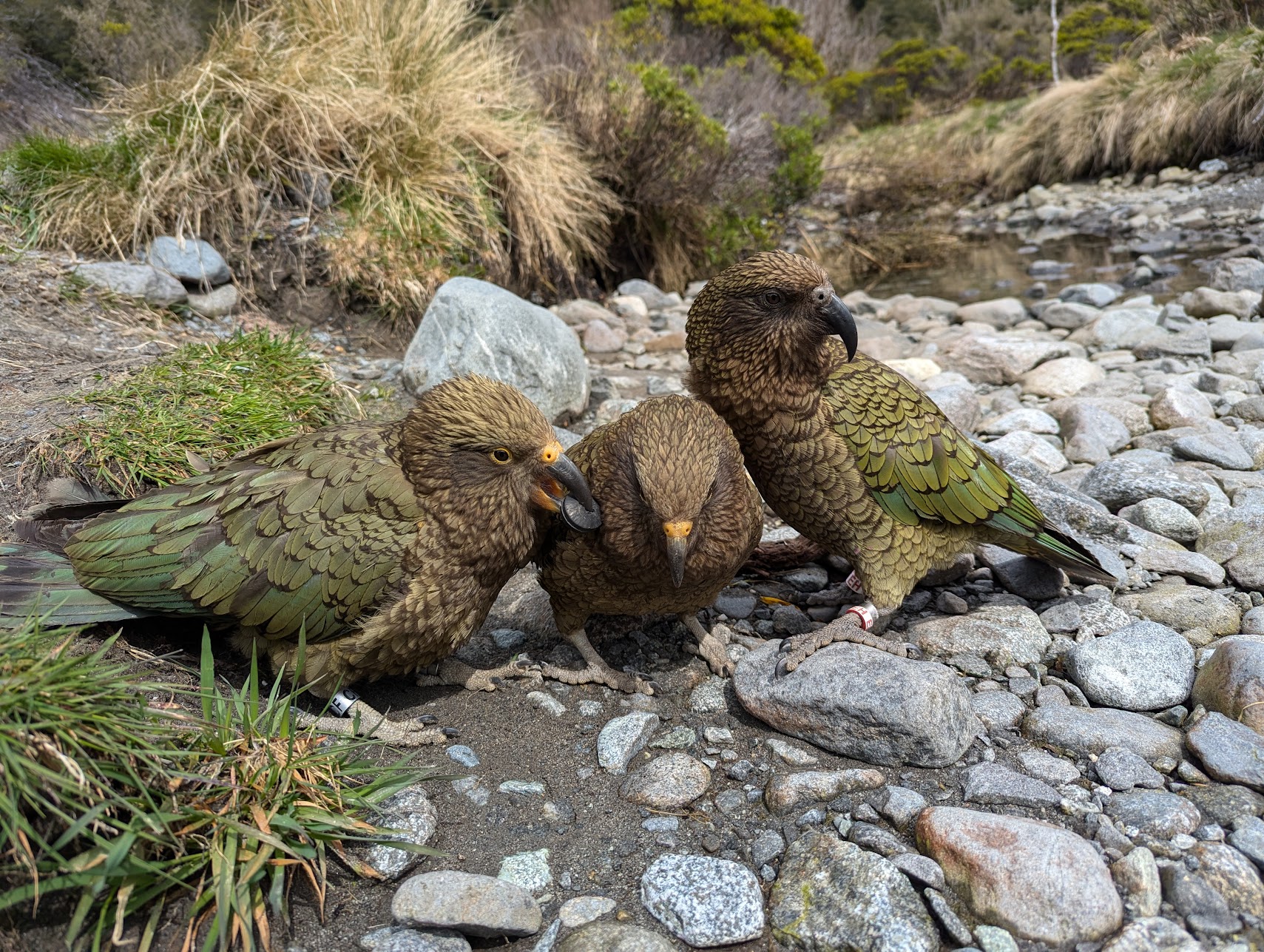
This is what I chose to do on an isolated beach in Southern New Zealand at a time when I felt closest to freed from all wants.
In the United States, we tend to cling to a set of founding principles which, constrained within the sociopolitical and moral lens of their original time though they were, still ring true enough to the sensibilities of today to remain key tenets of the ideal American lifestyle. These principles are frequently colloquially referred to with a single word: freedom. There is, has always been, and will always be significant debate surrounding the nature of freedom, a potentially-multifaceted but as-yet-uncut gem of a concept. However putting aside the grievances and debates without diminishing their relevance, there is one abstract version of freedom which truly summarizes the utopian ideal of humanity (or indeed any species) as a whole: freedom from want.
Freedom from want alone as a phrase is unambiguous in compliance but murky in scope. But to extend it to the furthest reaches of primitive instinct and no further, it means the part of our animal brains which a billion years of evolution has tuned to constantly scream and fight and beg for material sustenance is effectively turned off. Is that a state of being we can even contemplate today with any accuracy? To not only lose the feeling of instinctual want and need, but to become ignorant of such an instinct altogether? To answer the rhetorical question: no, I don't think so. But at a societal level it's interesting to consider what the implications of a society becoming free from want would be.
Sci-fi and fantasy explore this type of scenario frequently. 1930-60s sci-fi is famous for the recurring trope of end-state globalization rendering humanity one united species focused on the removal of want. Reading these fictions as a modern world citizen, it can be almost tragically endearing to consider that these authors believed that the effects of colonialism, the long standing religious divides, and the predisposition of mankind to detest the rest of mankind could be fully overcome in a matter of a generation or two. Of course, by the middle of the cold war we see the bitter cynicism of the post-nuclear age manifest more and more, shaping sci-fi into the genre that is today more associated with dystopia than utopia.
Arthur C. Clarke's '2001' universe is a classic example of a post-want world where past ills are seemingly forgotten. A longtime resident of Sri Lanka, Clarke's works depict a world where the cold war is continued as a mere friendly rivalry and the technologically-elevated former British colonies display a duly deferential friendliness and loyalty to the crown.
Sci-fi writers of the past often took the view so common to the post-industrial-revolution western world that human technology only advances, and humans embrace technology and grow with it. Not only that, but these authors frequently embody an optimism that is often held by the highly educated and highly stable - which is borne from the sense of their reason being "true reason". To authors like these who have grown up in a stable environment, in a comfortable society free from frequent disturbance to the status quo (at least within direct view), and then gone on to become a stable brick within this societal structure, there will inevitably be some preconceptions and predispositions of how one responds and adapts to change. Furthermore, the nature of these changes is often expected - the characters of these novels plots are, more often than not, astronomers, physicists, statisticians, or similarly engaged scientists who are dealing with revelations in science that can be eventually rationalized within their frames of reference.
The classic sci-fi trope of "post-want-society" is then somewhat uniquely bounded within the sci-fi focus on the highly "educated, enlightened, and effective" classes of humans. So what about other fictional representations of this aspired societal optimum? A more modern take on this, taken to the extreme of post-scarcity, is Ian Banks' Culture series, in which a "pan-human" or "pan-humanoid" (inclusive of Alien races vaguely similar enough to us) society exists called simply "the Culture", which has reached the final stage of galactic civilizational evolution prior to "subliming" into a purely non-physical form. The eponymous Culture has seemingly intentionally chosen to persist in a state of "free of want" where there is full license and resources for every human to pursue only their own interests, anywhere in the reachable galaxy, with infinite resources, transportation, protection, and re-animation. Not only a society without want, but a society without risk. What's interesting about Banks' representation of this idyll is that he acknowledges that there's something ingrained in humans to reject comfort. Despite the freedom from all forms of want, individuals still, in almost all cases, prefer mortality, seek risks, and sometimes voluntarily exit the Culture.
The intrigue of the novel series focuses largely on the boundaries of this society - where it meets other, less advanced societies and how it navigates the moral challenges of being free of want but being adjacent to near-infinite want in all directions. Coming back to the USA today, it suggests that if America were to achieve the egalitarian ideal (in an almost Marxist utopian way) such as was done in the "Culture", it would be through one of two extremes defining the boundaries of the problem: globalism or isolationism ad maximum. It's a bit of an exercise in futility to even consider isolationism today, where global supply chains, communication, and technological advancement are so crucial to the economic and intellectual output of the United States. There's no conceivable, realistic way we could (even gradually) snap a chalk line and retreat from globalized Earthly society. So globalization ad maximum it is, turning what we've been painting in an American context into a pan-human expression of freedom.
So how does the US achieve freedom from want through globalism? And when I single out the US as opposed to any other nation today, I'm considering the more unique positions and cultural elements that the US enjoys. For example, the US is geographically isolated, large, and contiguous in a way that only a handful of other countries can boast. It has an extremely wide ecological variety, and yet a very homogenous government-enforced culture. There's also comparitively little historical bias given that the settled populations are young, and the native populations are either exterminated, assimilated, or largely homogenized and sequestered in reservations. Given the combination of raw resources and relatively homogenous culture, language, and style, the US arguably has a leg up on the elimination of want. The needs of the individual are well understood and well measured at a national population scale, and governmental standards are notionally uniform across the geographic span of the country. We have metrics today, from years of successive national censuses describing exactly where shortfalls are and how far from the mean they are.
And let's establish a minimum viable product - the baseline of freedom from want is not the utopian "Culture" society that Iain M. Banks described. It's the fulfillment of the basic "socialist utopian" needs of food, water, and shelter plus the evolved basic needs of a modern, global, society that still needs to plateau or grow - healthcare, digital connectivity, gainful employment, education, security, and (the hardest part) retaining constitutional privileges (I call them privileges not rights because they can be taken away). In practice, every road towards utopia is mired in this final hurdle: "my utopia doesn't involve you in it". And that is human nature. And that's why we can't have nice things.
So that's it? Yes, consider this a retrospective. There's no grand plan for achieving freedom of want. We just acknowledge, gratefully, that we are in a time and place that has never been more capable, more prepared to extinguish wants. Yet also in a time and place where technology keeps evolving new and more unattainable wants (that we think we need) faster than we can rationalize them. And the cost of our wants being satisfied is in blissful ignorance of everyone outside our national boundary. So really, if there's one moral of the story its this: Want to be free? Want less.

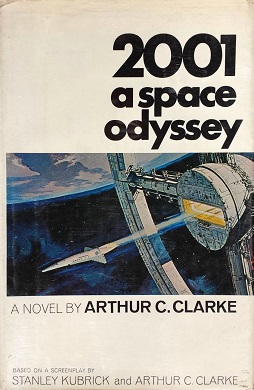 Arthur C. Clarke's '2001' universe is a classic example of a post-want world where past ills are seemingly forgotten. A longtime resident of Sri Lanka, Clarke's works depict a world where the cold war is continued as a mere friendly rivalry and the technologically-elevated former British colonies display a duly deferential friendliness and loyalty to the crown.